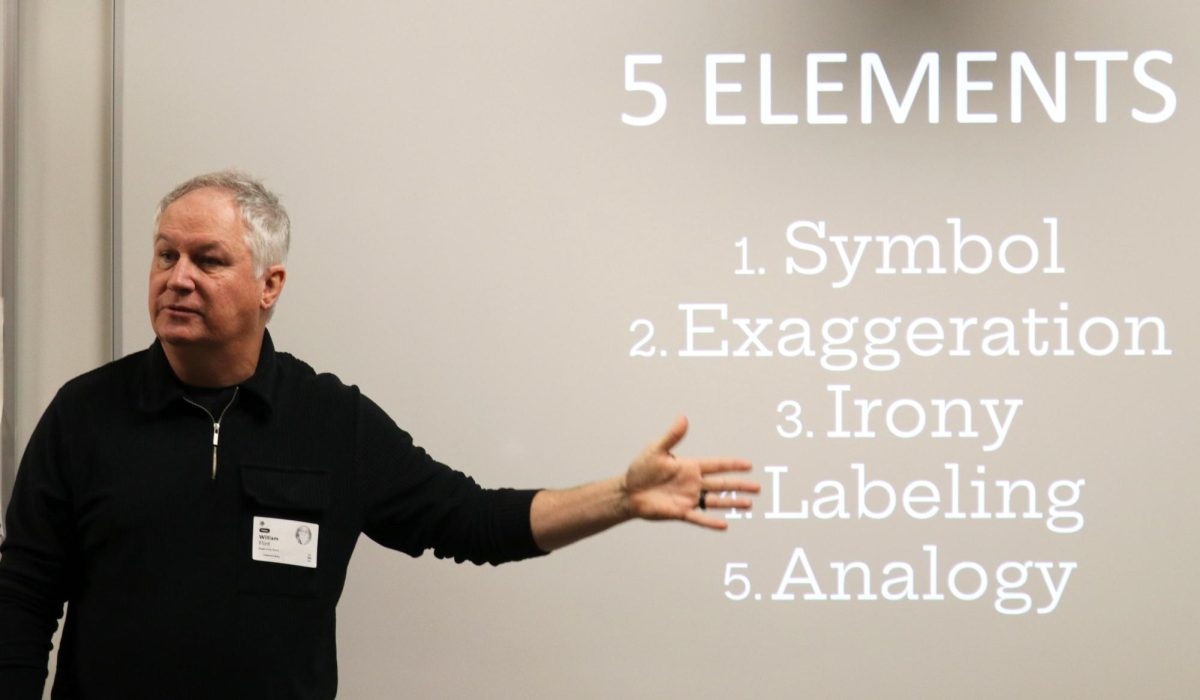

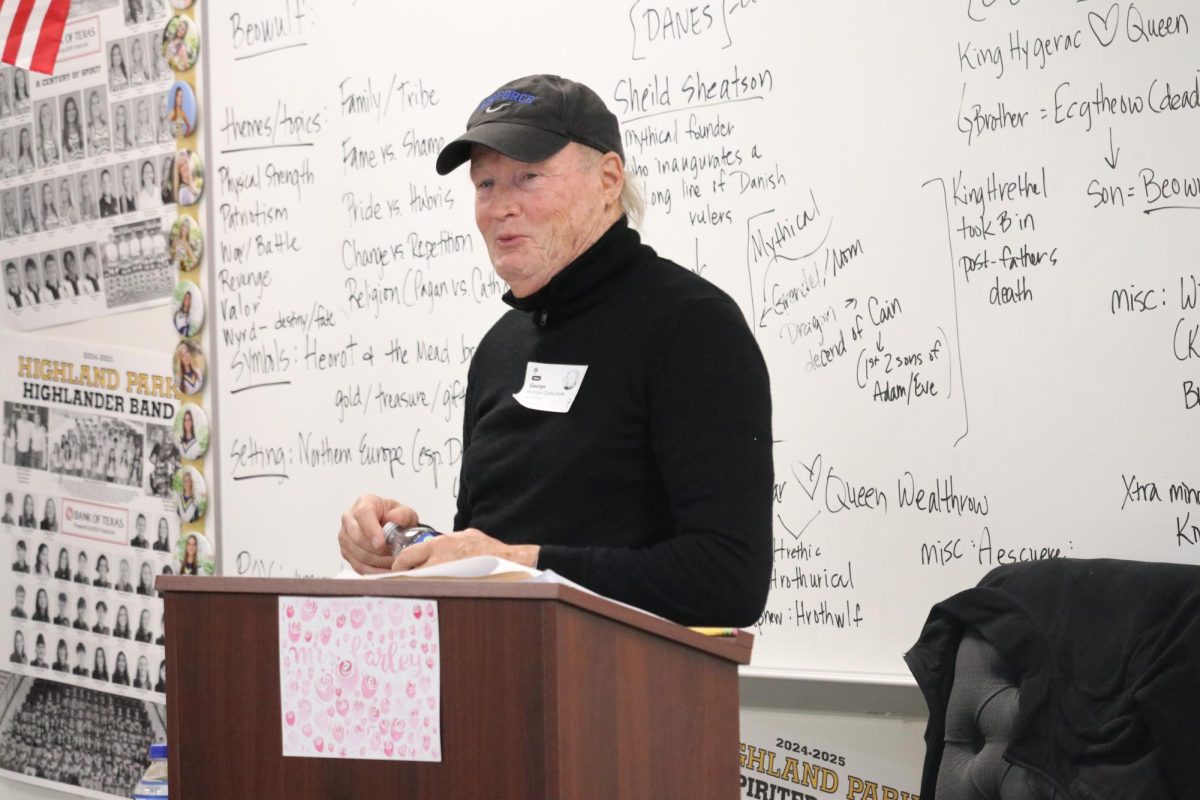
Throughout his presentation, George Getschow never used the term “college essays,” he only used “personal essay”. From the beginning, he made it clear that admissions officers are not looking for a polished resume with fancy wording. Instead, they want to understand the person behind the application. It takes one glance for colleges to know what students do, what they really want to know is who students are.
Getschow started by emphasizing the importance of the personal essay. He described it as unique and reflective, a space where students should illustrate themselves as vulnerable. Rather than writing what they think colleges want to hear, he encouraged students to be “self-indulgent,” or to slow down and deeply explore their own experiences. A good essay, he explained, commands attention not through exaggeration, but through honesty.
As he continued, Getschow outlined several “hallmarks” of an exceptional essay. He stressed the value of emotion, urging writers to convey heartfelt sensations rather than surface-level descriptions. He advocated that students should show their community and relationships though small yet impactful moments they went through. He furthermore stressed that showing emotional sensitivity rather than flawlessness influences admissions officers more intensely.
Getschow then shared an example of feeling out of place after moving from Chicago to Texas to demonstrate his argument. Titled, I’m a wannabe Texan, Getchow reflected upon his harsh experience with humor and vulnerability, he transformed a simple personal challenge into a trial of his true identity. The example illustrated how conflict and discomfort can become strong tools in essays when handled correctly.
Throughout the presentation, Getschow also analyzed excerpts from various essays with the class, pointing out how strong writers use emotional hooks to draw readers in. These hooks often begin with a graphic moment that allures curiosity. He described that effective essays do not attempt to impress through accomplishments, but instead through precise storytelling and emotional depth.
Ultimately, Getschow’s presentation interpreted that the college essay is more than just an application requisite. He encouraged students to embrace honesty, humor and vulnerability, and demonstrated that the best essays are those that show a student’s hardships and struggles. He left the audience with a message that authenticity, not perfection, is what resonates with admissions readers.