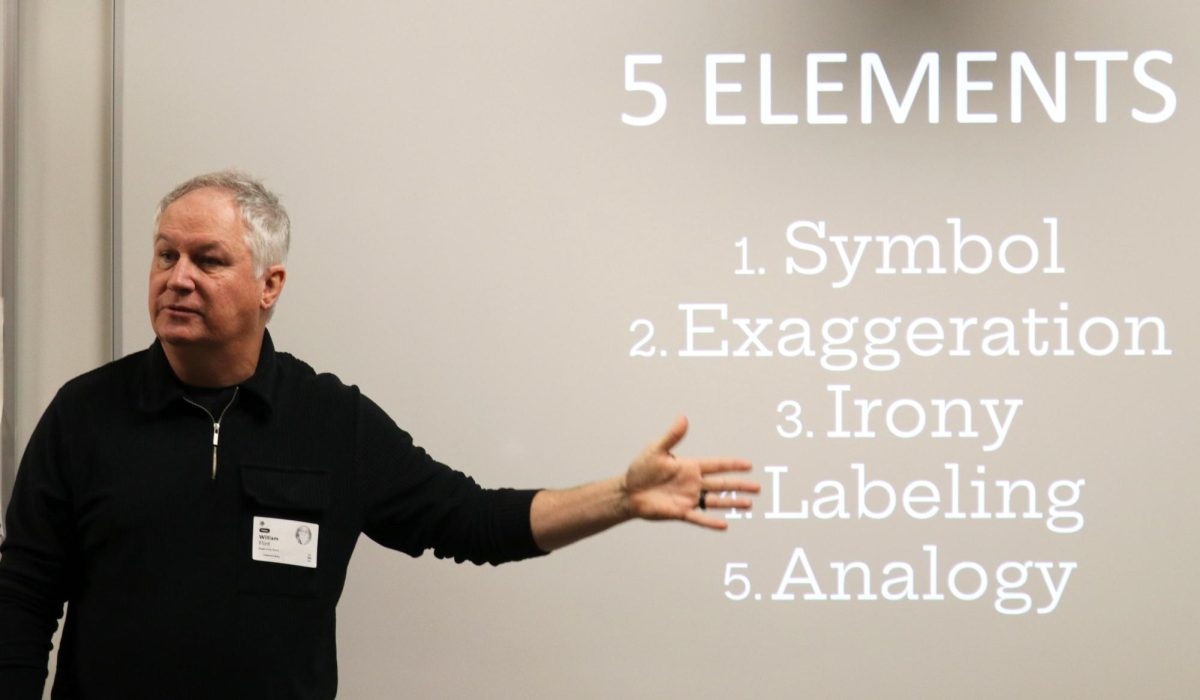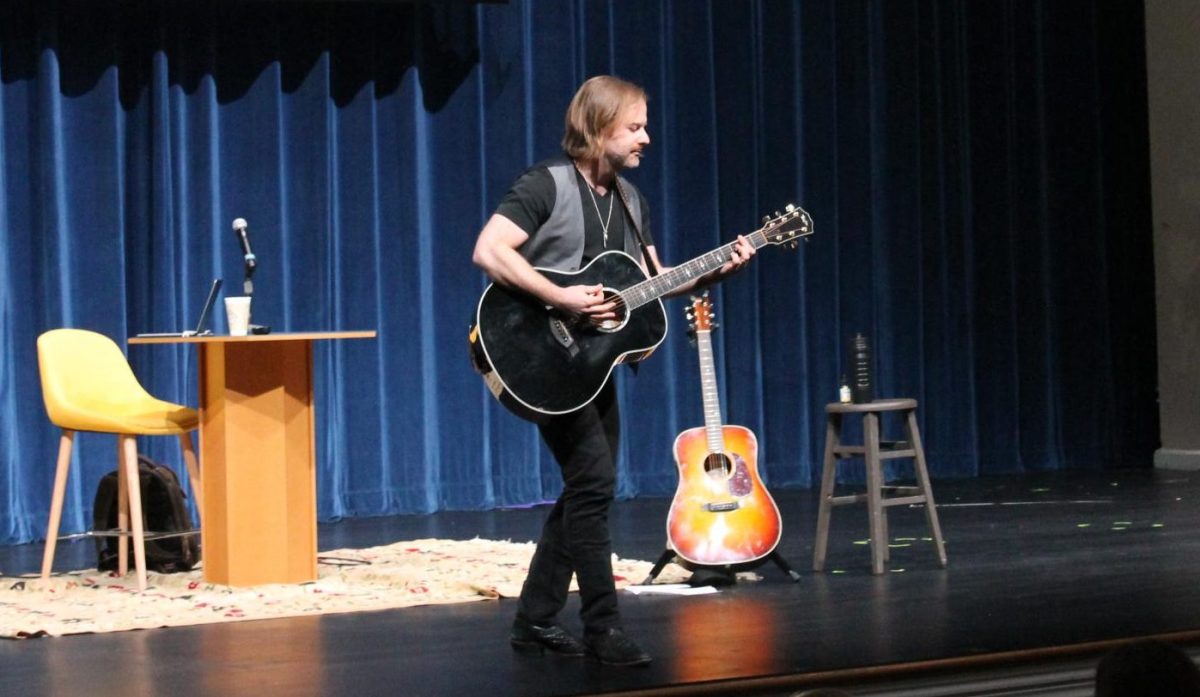


Media strategist Ronell Smith focused on the power of human perspective in his presentation, “Narrative Intelligence: Seeing What the Algorithm Misses.” As founder of Narrative Alchemy and an advisor to media and technology leaders, Smith calls on his experience to explore how storytelling and observation shape strong decision making in the age of artificial intelligence.
Smith began by asking students to consider how their personal worldview influences the stories they tell and the decisions they make. He explained that while AI can process information, people provide meaning. He described this difference as the “observation gap,” where data shows what happened but humans understand why it matters.
The presentation emphasized active participation. Smith led students through an “active noticing” exercise, asking the room to sit silently for one minute and simply observe. When students shared their observations, each response differed, demonstrating how individuals interpret the same moment in unique ways. Smith used the activity to show that misunderstanding often comes from failing to notice deeper signals beneath surface assumptions.
Throughout the workshop, Smith introduced The Anatomy of Misunderstanding, a framework examining three layers of storytelling: surface perception, deeper reality and the missed signal. He encouraged students to listen past noise, recognize subtle tensions and ask critical questions such as who holds power, who remains silent and what story exists beneath the obvious.
Smith also discussed creating a “permission structure,” challenging students to identify what prevents them from making decisions and what barriers must be removed before action can happen. Developing a clear and defensible narrative, he explained, allows leaders and students alike to feel more confident navigating complex situations.
Smith closed the session with student questions, creating a conversational atmosphere that emphasized reflection and engagement. His presentation highlighted a central message: in a world increasingly shaped by algorithms, human observation and storytelling remain essential to truly understanding people and problems.