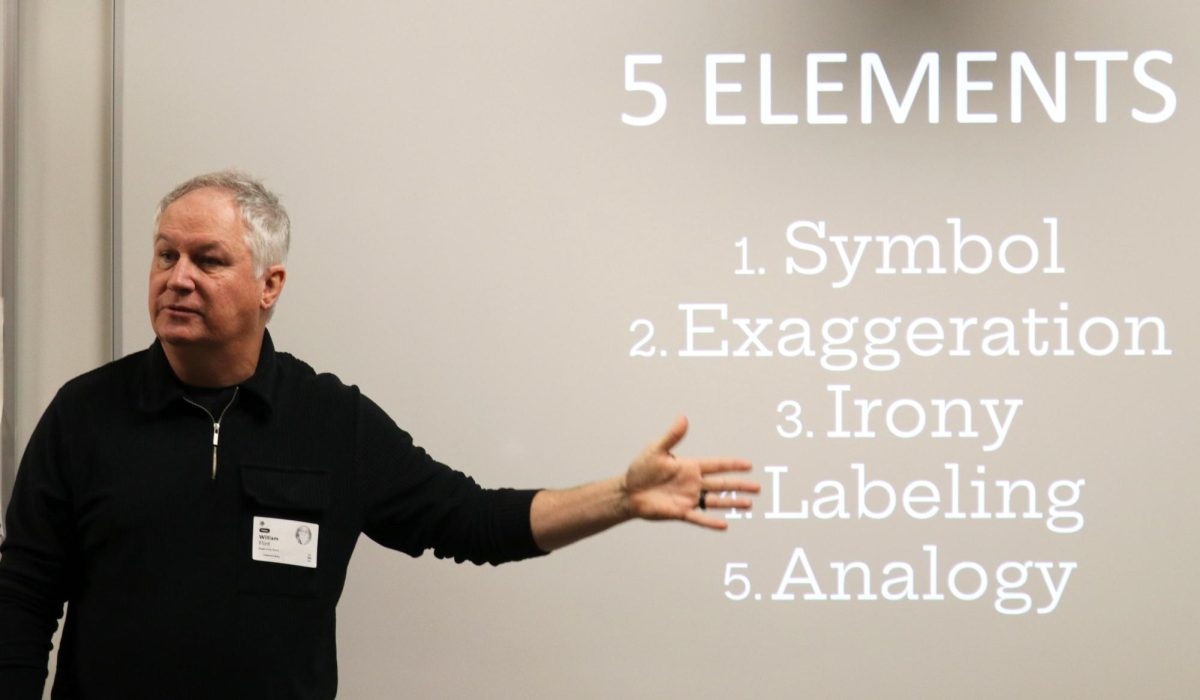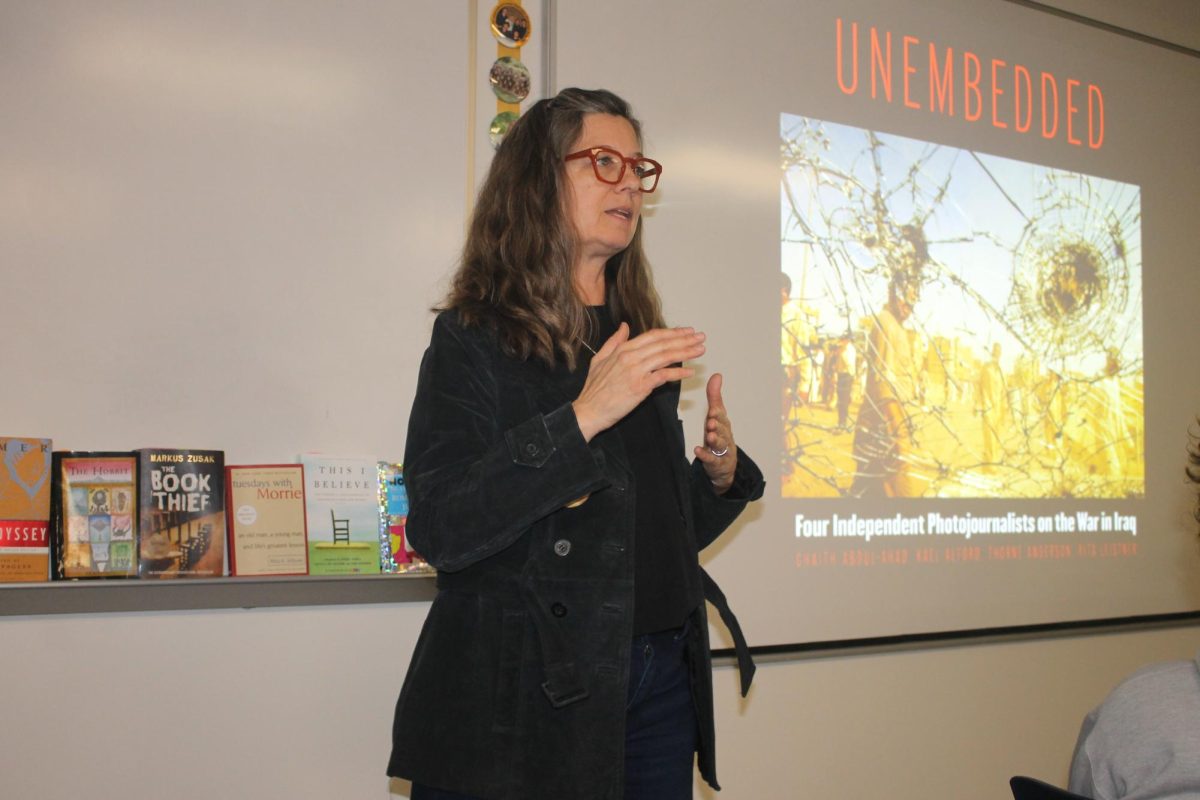

In her presentation on true crime, Glenna Whitley was captivating, informative and intriguing. In an illustrious career as a crime reporter, Whitley has covered everything from serial killers and cold cases. In her presentation, Whitley shared her expertise with students in an informative and interesting format.
Far from offering broad, overarching advice, Whitley offered practical advice gained from her years of on the ground experience. By far some of her most memorable advice was in how to speak to a person involved in a court case. Whitley shared that she has learned to be firm but gentle, empathetic but cautious. Additionally, Whitley shared that any young journalist needs to know their first amendment rights like the back of their hand. While freedom of the press is protected, libel is not. When covering a case, especially before trial, a journalist must be careful. Whitlet shared that her own articles are reviewed by a lawyer before publication.
Similarly, Whitley reminded her audience that in some states it is illegal to record a person without their knowledge, while in some states this is perfectly illegal. Whitley stressed that when covering a case, a journalist should fact check everything possible. Sharing a journalism adage she learned in school, Whitley said, ‘if your mother says she loves you, check it.” From accessing courthouse records to the Freedom of Information Act, Whitley shared that information if often available, if one knows how and where to look.
In addition to sharing advice on how to investigate a story, Whitley also shared her experience when it comes to writing a story. One of the major points Whitley stressed was in writing a solid lead. She told her audience to make sure the audience knows important details, like who, what, when, where and how. But, also not to reveal too much information too quickly. Whitley advised ending each paragraph by leaving the reader with a question, something to compel them to continue reading. Whitley then offered her audience examples by sharing stories she herself had written over her career. One story centered around the cold-case murder of a wax-measum heiress. Another story was chilling in its recollection of a prolific killer, who seemed to lack any M.O.. The stories were captivating, and listening to Whitley’s own narration brought the stories to life. Additionally, Whitley shared stories from her own career throughout her presentation, offering dramatic stories from a life of interacting with criminals.
Whitley’s presentation was captivating and informative. In sharing the lessons learned from her decades of experience, Whitley was impressive. Her expertise and skills were beyond-apparent. When the bell to end the period rang, I was disappointed because I could have listened to Whitley speak about her work for the rest of the school day. Hopefully Whitley chooses to return next year, as any student would be incredibly fortunate to hear her speak.