

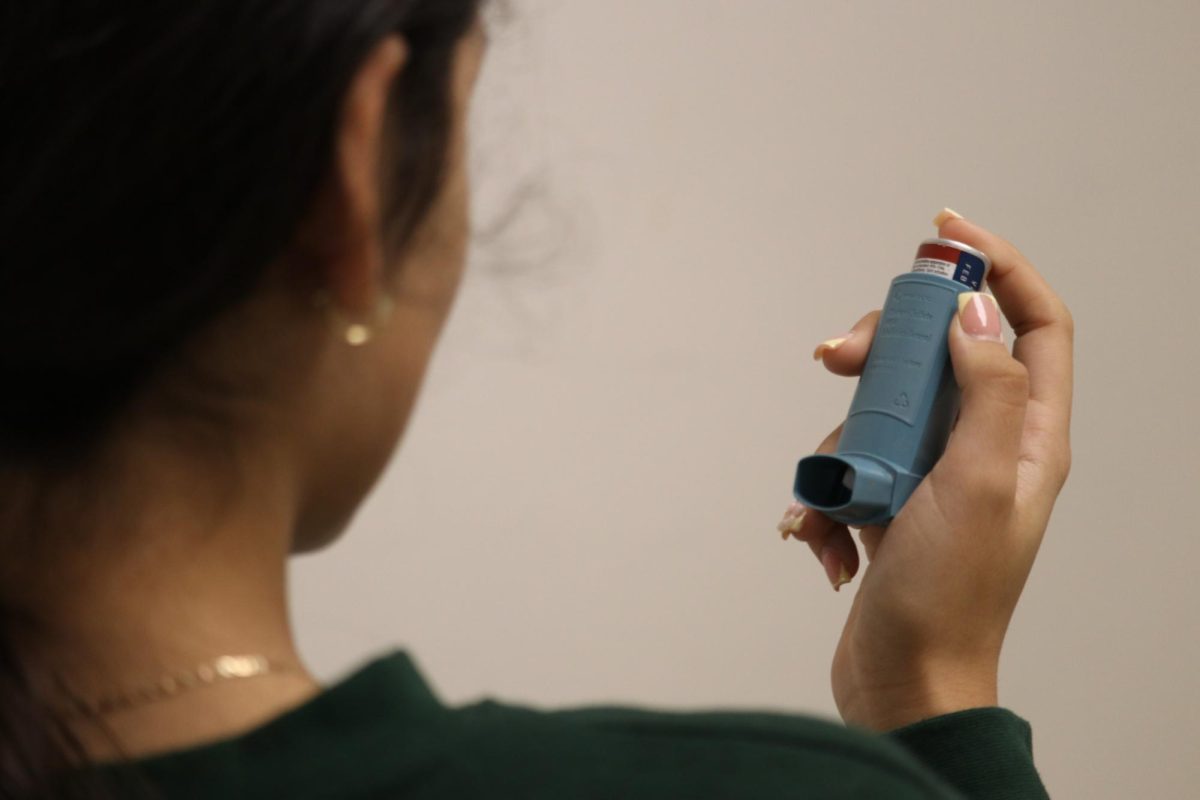
The warning does not come with smoke or sirens. Instead, it appears quietly on weather apps: poor air quality. For students with asthma and allergies, those invisible particles in the air can turn an ordinary day into a struggle to breathe.
“There are studies that show kids who grow up in polluted areas have less optimal lung function, which makes it harder to breathe and makes people more susceptible to illnesses,” Board-Certified Pediatric Allergist and Immunologist practicing at the Dallas Allergy & Asthma Center Dr. Micheal Ruff M.D. said.
Air pollution is formed by different pollutants released into the air. The five main pollutants include ground-level ozone, particle pollution, also known as particulate matter, carbon monoxide, sulfur dioxide, and nitrogen dioxide.
“Whenever different pollutants mix in the air and react to sunlight, it can produce ozone, and ozone is very toxic. So when ozone is in the troposphere, which is where we breathe air from, it creates a bad atmosphere,” Physics and Environmental Science teacher Jeff Barrows said.
For a while air pollution was improving with new laws and precautions, like the Clean Air Act of 1967, that were designed to reduce air pollution. In fact, according to the U.S. Environmental Protection Agency, or EPA, the combined emissions of the six most common pollutants dropped 78% from 1970 to 2021. However, the increased forest fires in the West and in other countries have caused air pollution to rise again.
“If you look recently, there have been some detrimental effects, from the wildfires that have happened out west in Oklahoma, Mexico, South America, etc that have all affected air quality, and we’ve seen stuff called particulate matter increase over the last few years because of those wildfires” Ruff said
As wildfire smoke raises particulate matter levels, physicians are seeing more patients experience serious lung issues.
“There are studies that show when air pollution goes out of control, kids with asthma and adults with COPD, which is chronic obstructive pulmonary disease, which is caused by smoking and vaping, the ozone in the air will inflame people’s airways, irritating their airways, making it harder to breathe,” Ruff said.
On high air pollution days people with asthma, COPD, or allergies can experience heightened symptoms.
“I get shortness of breath, I can start coughing, and I can usually also feel my throat closing up when it gets really bad,” freshman with asthma Luke Purcell said.
There are a lot of long-term medical effects caused by air pollution, whether they have asthma, COPD, or are perfectly healthy. Not only can air pollutants give people asthma, but air pollutants can also create long-term effects that can lead to heart attacks, bronchitis, and lung cancer.
“Air pollutant particles are so small that those particles can penetrate deep into our lungs and they can actually be absorbed into our bloodstream, and they can cause all sorts of deleterious effects,” Ruff said.
Even on a day-to-day basis air pollution can make performing simple tasks more challenging. Every day activities like walking, exercising, or even just breathing become 10x harder on high air pollution days.
“Air pollution makes it harder for me to do a task consistently, because the air pollution can really spike my asthma out of nowhere, and so it’ll be harder to participate in things I would usually have no problem doing,” Purcell said.
Air pollution reaches its peak in the summer because of the intense sunlight increasing ozone levels. Studies have shown that summer afternoons have some of the worst air quality levels of the entire year.
“During the summer when we have high air pollution days, we advise people with asthma to go out to work out in the early morning because it peaks in the afternoon because of the sunlight and the heat,” Ruff said.
Air pollution continues to be a safety concern for people with or without asthma and allergies as long-term exposure can negatively affect overall health. Because air pollution can come from a wide range of sources, it remains an ongoing public health concern that affects communities across the world.
“Currently, wind energy generates anywhere from 20% to 28% of our electricity, while fossil fuels create 12% to 16%. The best way to reduce air pollution even more would be to increase wind energy or solar energy even more and continue to reduce energy from fossil fuels” Ruff said.