
Outside of the United States, learning a second language isn’t just an elective that earns a credit in high school. In many European countries, kids start multiple foreign language classes when they’re still in elementary school and continue until graduation.
“You have to take English until junior year, and then you can choose not to take it and take different courses,” freshman Conrad Velten, who moved from Germany two years ago, said. “So basically from second grade to 11th grade we had to take English.”
Since places like Germany are situated right in the middle of Europe, which has a diverse language culture, schools emphasize and encourage language learning among students.
“They really want you to be fluent in English and to learn another language on top of that. I feel like it’s not that big here. You must have at least five years of another language that’s not English [or German],” Velten said.
Since a lot of languages share similar roots, bilingual students have stronger foundations in the learning of other languages.
“Latin grammar is basically the same as English grammar. I’ve got to learn vocab words and that’s it,” Velten said.
Here, things are going in another direction. Even though the US is a diverse country where multiple languages interact, the language programs at our school are only decreasing. Starting next year, Chinese will only be available for higher levels and will no longer be available for beginners.
“We’ve been struggling since COVID. A long time ago, when I started here, we had around eight sections of Spanish two. We’re down to five. You can see that through the whole program.” Spanish teacher Maria Del Carmen Moises said.
In the United States, language learning is not encouraged as much because it is more an advantage than a necessity, like it is for Europeans.
“There’s a real push (in Europe) for either being bilingual or trilingual because it opens up so many more doors for you. Whereas in the U.S., it definitely opens up doors and allows different possibilities, but it may not be as essential as someone growing up in Europe,” counselor Charles Trahan said.
In the past few years, the district has been trying to install the Foreign Language for Elementary School program (FLES). It has been proven that the earlier someone starts learning a new language, the easier it is to achieve fluency, retain vocabulary, and remember grammar rules. The introduction of a second-language at an earlier age provides students with a stronger linguistic foundation, getting them ready to pursue it at higher levels in high school.
“Right now we go through Spanish 5, which means 7th and 8th grade, you take it and that combines to Spanish 1 and then you take it every year. I do think that if we started it earlier, kids would find it more accessible. They wouldn’t be as scared to take Spanish three or four or five because they have a foundation,” Trahan said.
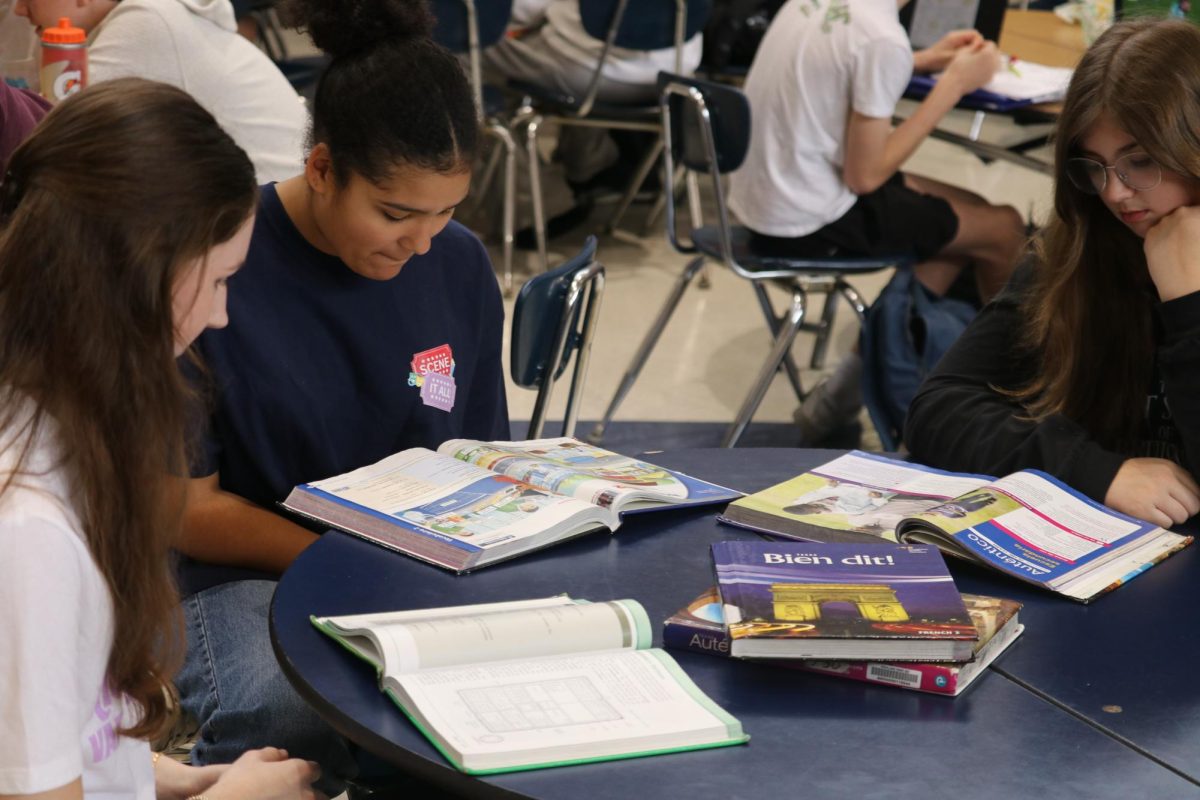
These declines in language programs are especially discouraging for foreign language teachers who have spent years encouraging students to embrace bilingualism.
“It’s okay to make mistakes. I make mistakes in English,” said Moises. “When they are reluctant, or they are afraid, they want to quit or change because of the difficulty of the course, I try to ask them to just wait a little and not be driven by the grades”.
Programs like FLES or the benefits of learning a second language can also bring unique opportunities during adulthood.
“They (bilingualists) can view the world differently. They gain global competency. They can have better job opportunities. They can communicate and understand cultural differences to make businesses,” Moises said.