
As college applications approach, high school students across the country are feeling pressure. Between balancing classes, extracurricular activities, jobs and personal responsibilities, students are struggling to manage their workload. For many teenagers, what should be an exciting milestone has become a high-stakes stress scenario that tests their resilience, time management and mental health.
“It was really overwhelming trying to figure out how many colleges you want to apply to and when to apply for them and just all the little decisions you have to make,” senior Lucy Henrich said.
Students are also taking fewer classes they enjoy in order to maintain a high GPA. While students are trying to take the class to give them the best GPA, they are having to drop extracurricular activities and classes that are less beneficial.
“I am really interested in art and I love art, but sophomore year, I didn’t take an art class because I wanted to take another AP class. Looking back on it, it seems really silly and I regret it, but now I focus on APs over art,” junior Sophia Price said.
College represents a shift toward independent living. Schools, however, don’t help with this aspect of applying for colleges, so students feel unprepared.
“I just try to help them start to really stand on their own two feet instead of relying too much on others cause they won’t have that as much in college,” private college counselor Catherine Marrs said.
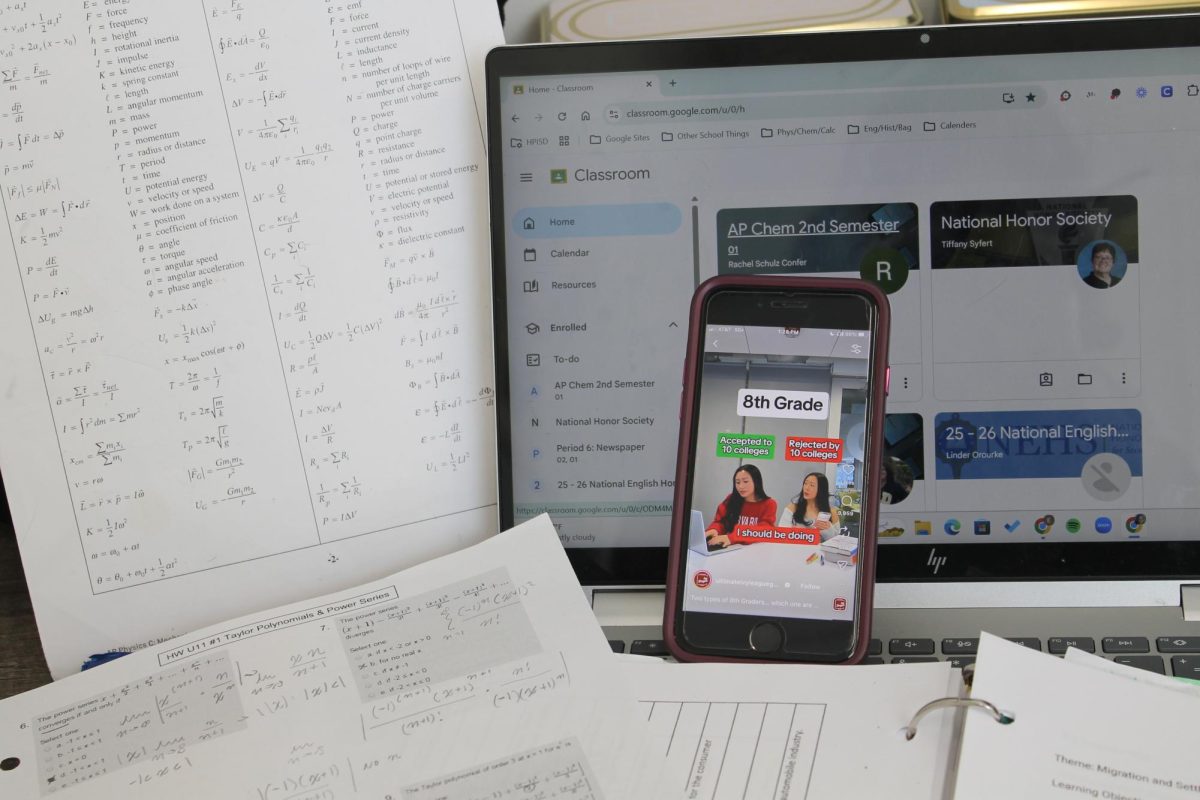
Social media also plays a role in the pressure students face during college applications, as now college application tips are spread online, where they aren’t fact checked.
“One thing that I saw a lot on social media was a ton of things about college admissions and people saying, there’s one way that you need to write this part of your application and there’s a right way and a wrong way, which isn’t true,” Marrs said.
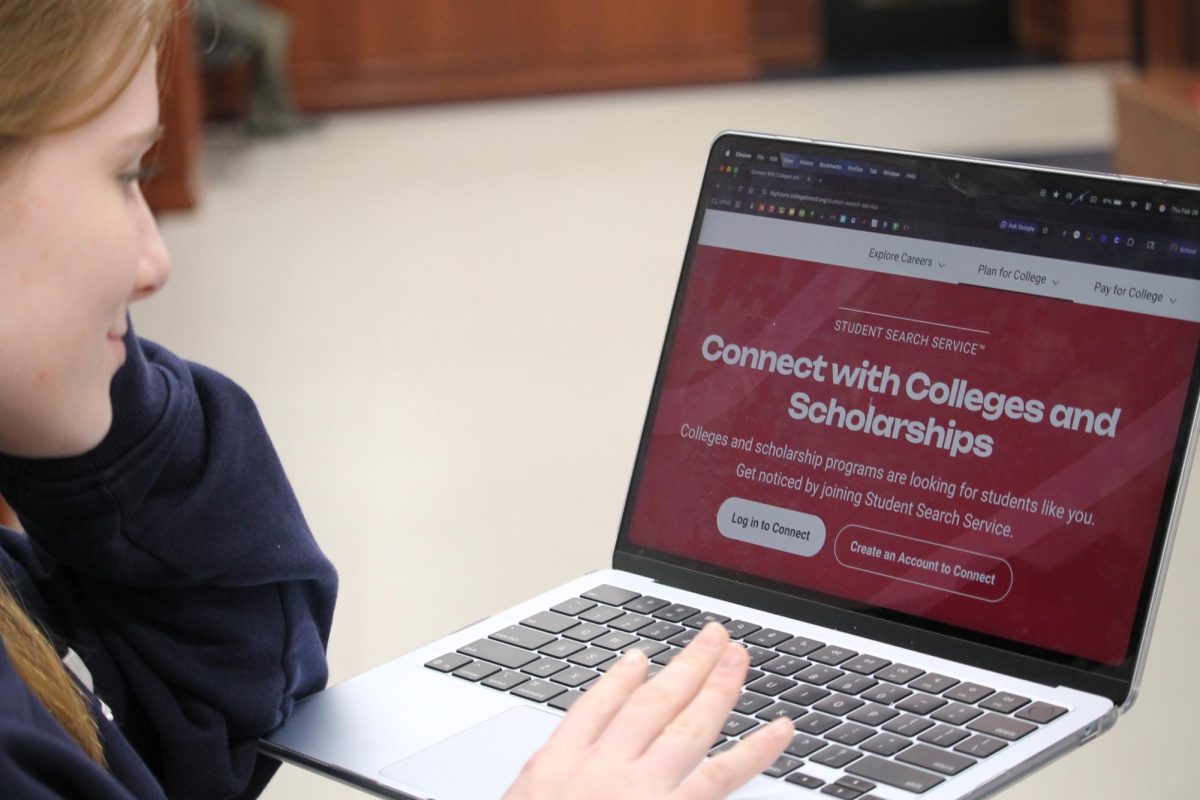
In addition, schools take a more of a hands-off approach in the application process. Due to this, a lot of the responsibility is left in the students’ hands and many have to get college counselors to help.
“I wouldn’t say school prepares you much to apply to these colleges. The bulk of it is honestly doing it yourself and researching what college is best or what you need yourself,” Henrich said.
The college application process is also crammed into the last year and a half of high school. As a result, activities like SATs, essays and application submissions are completed in a limited amount of time.
“I wish it were built in a way that was a lot less about one ACT or SAT score or one essay and it was more spread out across the 4 years. I feel like this would give us more opportunities to get a good grade on the ACT or SAT and we would have more time to do everything and we wouldn’t be so stressed about getting it done in a limited time,” Price said.
The SAT and ACT were developed to assess skills related to academic subjects. They are designed to measure preparedness for college-level classwork instead of intelligence beyond an academic setting.
“I feel like there are a lot of people who don’t have the time or resources for the tests, but they’re still very good students who would be perfect at the college. So, I think it’s necessary to kind of check people’s merits and like aptitude tests, but sometimes I think it might be weighted a little bit too much,” Henrich said.
While the college application process is efficient and many students get into their dream college through this process, the applications cause unnecessary stress for some students, and sometimes it doesn’t work. By changing the timeline of it, the testing, and the help you get, more students could be successful, and the college application process would be a lot less stressful.
“Honestly, in the end, I think most colleges will get you a great education. But I think that there’s definitely a lot of pressure to get into a good school and just about doing well,” Henrich said.