
Behind the weathered bricks of our historic school lies a hidden environment that is silently, yet profoundly, shaping the well-being of its occupants. Built in 1922, the high school stands as a monument to the past, but its age carries a quiet burden of outdated construction and materials that predate modern health regulations.
“You’re left with a legacy of materials that we’ve since learned are not very good for you,” SMU professor of environmental engineering John Easton said.
The risks tied to older construction are not always visible. When buildings are not consistently maintained or updated, hazardous materials can remain embedded within the structure.
“With a building that’s 100 years old, if it hasn’t been maintained and replaced, those things very likely do exist,” Easton said. “And examples would be lead-based paints or asbestos. The problem with it is that if you disturb it, it becomes airborne, and that’s when it becomes a health hazard.”
Still, aging materials represent only one part of the environmental strain inside the school. Even in a structurally sound building, the daily presence of hundreds of students creates its own invisible burden. Over the course of a school day, that human presence steadily affects indoor air quality.
“We are essentially shedding skin cells and fibers every second we are in a room, and with such a large number of students in the school, the air can get gross,” SMU professor of environmental engineering Kathleen Smits said.
As that biological material accumulates, the responsibility falls to ventilation systems to manage it effectively. Air circulation is not simply a mechanical function but a determinant of whether contaminants linger in classrooms. Even without considering older materials in walls and floors, utilizing high-quality ventilation systems within buildings substantially increases collective health, especially in crowded areas.
“I think it’s important that you’re not recirculating the same old stale air,” Easton said. “[Then] if you’ve got a problem inside, it just builds and builds and builds and builds.”
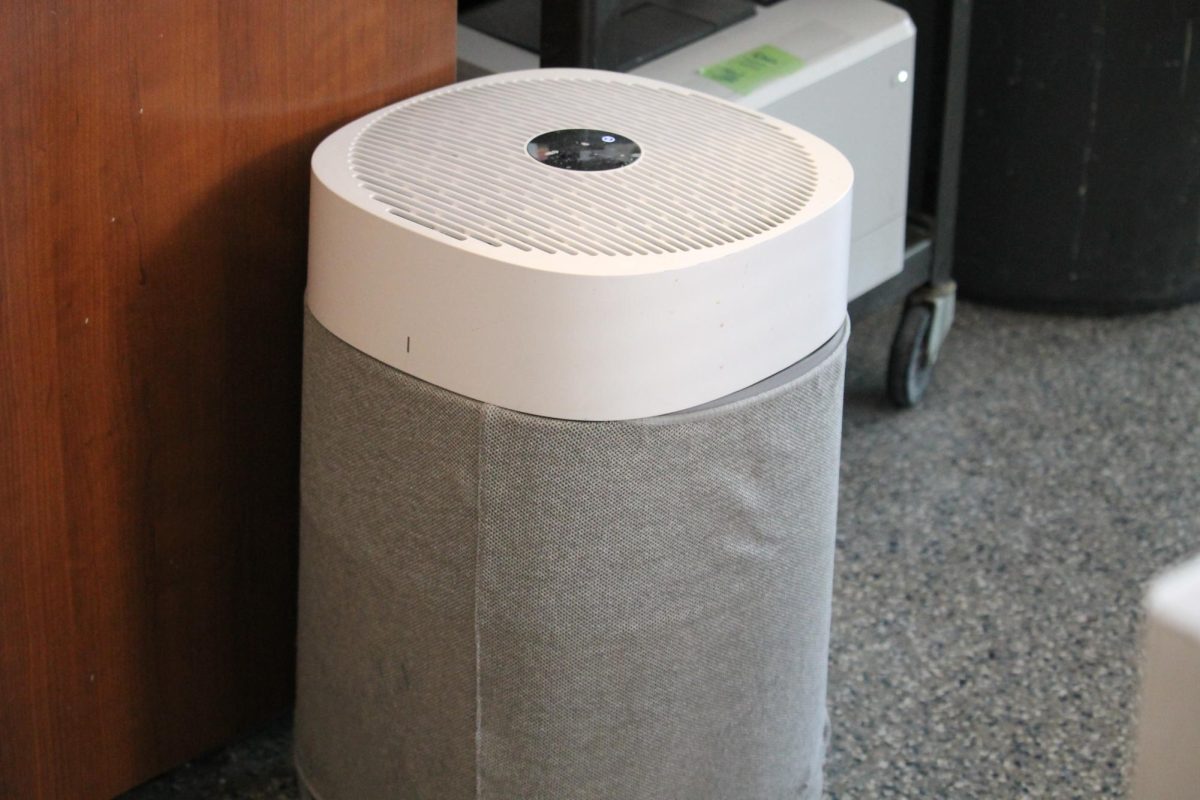
However, circulation alone does not guarantee cleaner air. The quality of filtration determines whether harmful particles are removed or simply redistributed throughout the building.
“Basic filters are sometimes designed to protect the machinery, not the health of the people,” Smits said.
Concerns about infrastructure also extend beyond what students breathe. In older buildings, materials can influence what students ingest as well.
“Lead pipes could be a source of lead into the drinking water, where rust can form on the insides,” Easton said. “And that makes nice little places where bacteria can hide and live in a biofilm, and be protected from the chlorine.”
The effects of these environmental conditions often surface gradually. Symptoms can appear during the school day and subside once students leave the building, creating noticeable patterns.
“Maybe they get headaches at school, but they don’t get headaches on weekends,” school nurse Mollie Brennan said. “Or they get maybe a runny nose at school, and don’t have that on the weekend.”
Physical discomfort can also intersect with academic performance. Conditions such as heat and poor air circulation may intensify stress during cognitively demanding tasks.
“It’s hard to take a test if you’re super hot,” Brennan said. “It can kind of manifest as a stomach ache or nausea or exacerbate anxiety.”
Researchers have observed that these environmental factors can influence cognitive function more broadly.
“Ability to perform in various cognitive ways is directly linked in a lot of ways to the environment that you’re in,” Easton said.
Over time, repeated exposure to these conditions can affect students in ways that are subtle but persistent. While the building itself may appear unchanged, the impact on daily well-being can accumulate across weeks and months of instruction.
“Cleaner air would just lead to overall better well-being,” Brennan said. “With cleaner air, I would hope that there would be fewer migraines, stomach aches, and any respiratory illness.”