
Concussions can occur in seconds, but the consequences can last weeks. Every year, thousands of students are getting concussed because of a fall, collision, or hit during sports and daily activities, and have to work through a long recovery process before returning to normal routines.
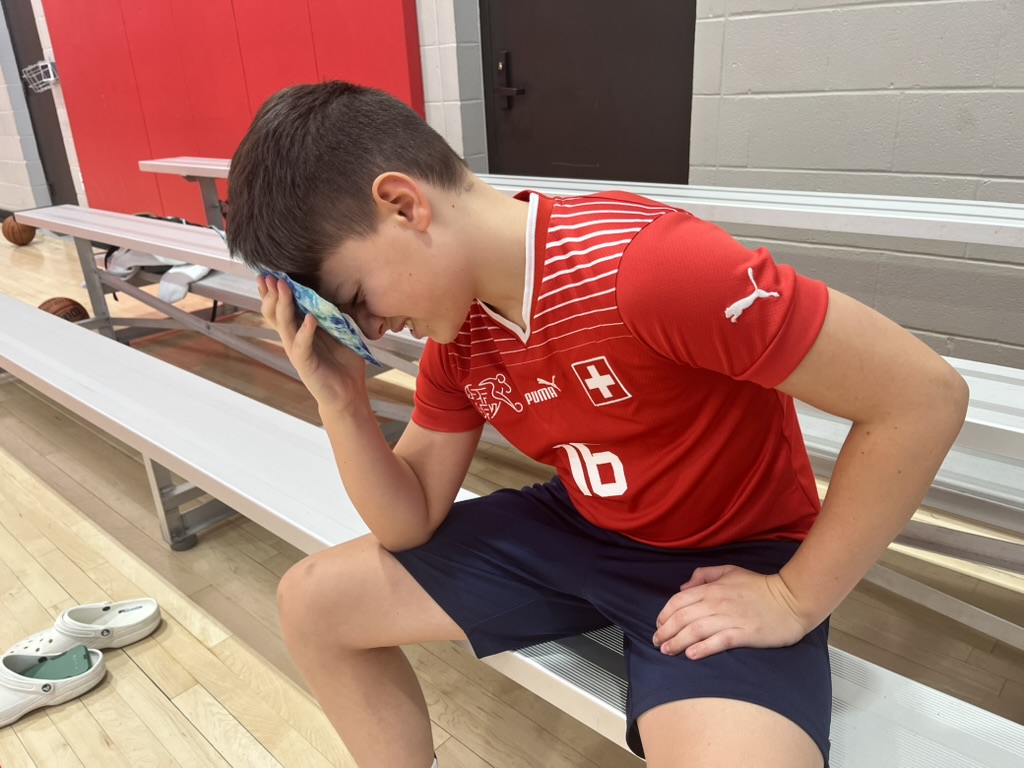
“I went head-to-head with someone and then the back of my head hit the turf, and I think it was just that bang bang that really did it for my head,” football player junior Cooper Alt said.
As a football player, it was Alt’s second concussion, so he was familiar with the usual symptoms: dizziness, nausea, headaches and sensitivity to light.
“I was on the bench and I don’t remember a good bit of it which is pretty bad but my teammate said that I was acting weird and they called the trainer over,” Alt said. “Then I remember he was telling me that I couldn’t play anymore, or at least for the next two games I couldn’t play.”
The trainers’ role is to prevent injuries like concussions but also to help the students with their recovery. When an athlete takes a hit in a game, trainers take them to evaluate the severity of the hit.
“We put them through a series of drills. First, we ask about their symptoms. And then we put them through a series of tests, some of them are memory tests,” head athletic trainer Christal Benson said.
After suffering a concussion, the return to school can be very hard. Even simple tasks like reading or using a computer can worsen symptoms, which makes it very easy for students to start falling behind on assignments. During this difficult time, they are supported not only by trainers but also by the nurses as well.
“We can provide a dark room for them to lie in with no overhead lighting or computer screens because your eyes can be kind of sensitive to those kinds of things when you’re recovering,” school nurse Molly Brennan said.
In 2011, a Texas law about preventing concussions was introduced. Called Natasha’s Law, it requires schools to follow strict steps after a student athlete’s concussion to ensure athletes are properly evaluated and cleared before returning to sports.
“When Texas made a state law that you have to handle concussions in a certain way, that totally changed the way that everybody looks at concussions and handles them,” Benson said. “Before this law, we didn’t have the whole return to play progression and all that.”
Since the law was installed, efforts have been made in concussion awareness but they can still be overlooked. Recognizing the signs and reporting them can prevent the injury from worsening and ensure that students receive the proper care and support from teachers.
“The recovery process is slow and it can make you fall behind in school because you can’t do anything that stimulates your brain,” Alt said. “My teachers were amazing and gave me plenty of opportunities to make up work. I hope every student going through this gets the same support I did.”