
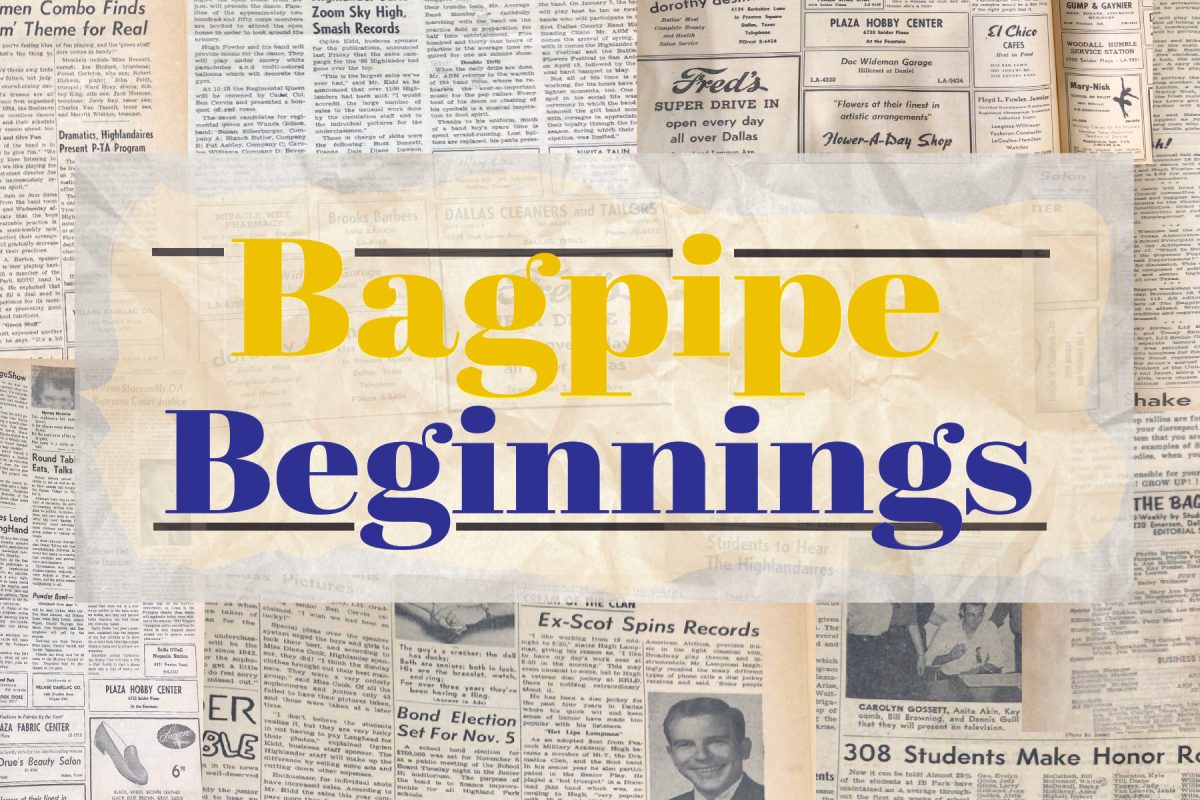
For the past five years, the Bagpipe has held the tradition of producing an “Issues Issue,” where our reporters take the time to tackle controversial subjects, take stances and address the problems they see around them. While this specific production may be new, Bagpipe reporters have been covering the problems around them for nearly 100 years. Though the issues may have changed, the Bagpipe has remained an outlet for students to bring to the forefront issues they feel strongly about. Listed below are samples of the bagpipe, highlighting the issues of the past.

In an issue from 1947, a short article writes of Europe’s desperate need for supplies, citing that German children would appreciate pieces of scrap leather to make dolls come Christmas. In issues of the Bagpipe covering the 1920s, 30s and 40s, a lack of political news is noticeable. The most common mentions of any global instability during or after the war are to gather donations for aid projects. In these days, it almost seemed to be an active choice on the part of the staff to cover local and school news instead of the unstable and warring outside world.

In the 1960s, the country was stuck with political strife, but the Bagpipe generally continued the tradition of reporting on school news instead. However, in one article, the editors of the staff do write their own message criticizing the high hemlines on some girls’ skirts, and poor hygiene. While this may seem (and partially is) a teenage criticism of new, somewhat rebellious fashions. But, it also seems to be a whiplash response to a broad, changing culture often at odds with previous norms of modesty and behavior.
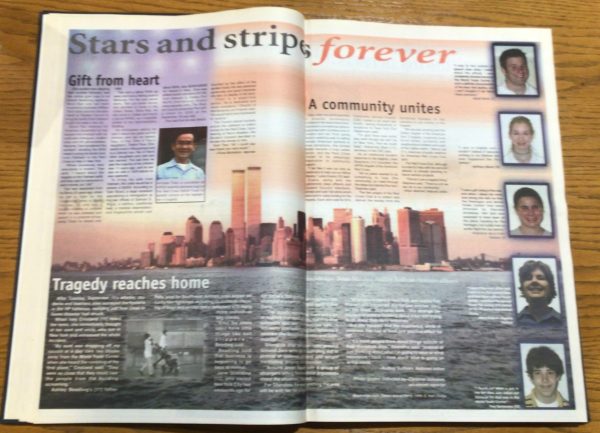
In September of 2001, the Bagpipe had long since stopped trying to be non-political. In the days after the terror attacks on the Twin Towers, the bagpipe ran a large print titled “Stars and Stripes forever” in front of the background of NYC’s skyline with the American Flag in place of the sky. In the years after this was published, and unlike in the 40s, the Bagpipe begins covering the wars in Iraq and Afghanistan. Similarly, though, instead of trying to cover the entirety of the war, the focus is on individual soldiers, HP alums primarily, and their and their family’s experiences. This choice humanizes the war, reminding readers of the people from their own community who are experiencing the conflict.
For nearly 100 years, the Bagpipe staff has used their position to write about the conflicts surrounding them. As times have changed, so too have the issues covered by the staff. From famine in Europe to rising hemlines, the Bagpipe has and continues to write about the issues affecting its staff, the student body and the broader world around them