
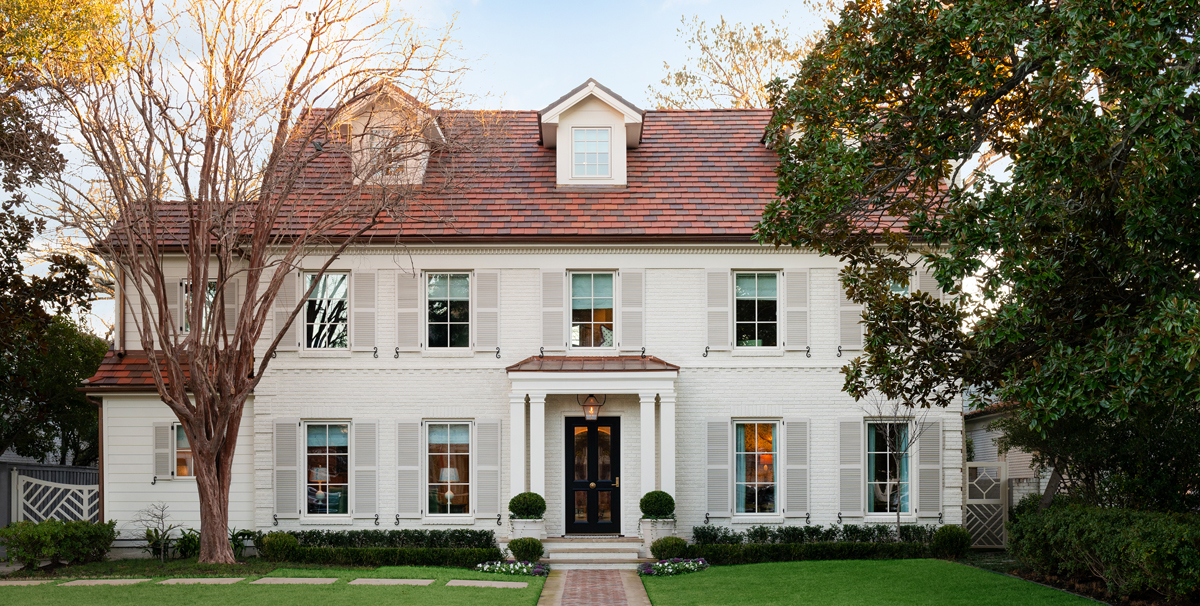
Walking down the treelined streets of the Park Cities, one can’t help but notice chain link fences often erected around older homes in the neighborhood. In some cases these barriers mean renovations are underway, but more often than not it means the home will be razed by the end of the month.
In response to this increasing reality, Preservation Park Cities (PPC) was formed. PPC is a non-profit organization consisting of roughly 400 families acting as advocates for historic properties in the community.
“We’re there to help educate and locate resources for the homeowners, whether that’s finding a particular specialist that does something well, or offering a consultation,” President Jason Moriski said. “I want people to really view our organization as an advocate for the homeowners.”
PPC hosts a variety of yearly events to raise awareness and funds for preservation. Those interested are invited to attend a Distinguished Speaker Luncheon, Vintage car show, and spring home tour put on by the organization each year. Members also have access to smaller events like the holiday party and educational forums.
“We typically will have a predominant architect, even landscape designers, or interior designers come speak with our members,” former President and board member Amy Beale said. “We look for people in our community who have a passion for preservation.”
Education is a key component of PPC’s mission to debunk myths and stigmas that arise when considering renovation over a new build.
“The materials per square foot [cost] is so much more to replicate what was built… 1936, It’d be almost cost prohibitive to build it today,” Interior designer and board member Courtney Petit said. “You turn those dollars into what they are today, the value of this house has increased better than anything that you’d get in the stock market.”
Increasing unusable square footage via oversized living spaces and cheap efficient construction are characteristics of homes designed to maximize resale value, opposed to longevity.
“Sellers are looking to sell their home to the right buyer, not the highest bidder,” Morski said. “Three families came to us wanting help locating the end user, not a developer or remodel flipper. They want to sell it to the right family that’s gonna live there.”
Older homes, while limited by ceiling heights, floor plans and structural restraints, offer residents a chance to reinterpret the home’s form and function to better serve modern demands.
“In the 1920s they didn’t have anything prefabricated, everything was made or manufactured on site so that means there’s some irregularities,” Beale said. “Dallas was a small town in the twenties, there wasn’t a Lowe’s hardware store or a Daltile to shop at.”
Some renovations opt to use materials concurrent with the time period, others utilizing a synthesis of old and new throughout the home.
“The main rule for renovating an old home when you’re doing an addition or a remodel is using high quality building materials the same or better as the original,” Beale said.
PPC grants two types of designations for architecturally significant homes fifty years and older. The first designation, landmark status is for homes that have been restored to the historical context in which they were built. The second designation is for outstanding renovations, giving owners more freedom in how they update the home and add personal design influences.
“In Texas, we don’t really want to infringe on property rights, so these designations are a way we can help promote the idea of saving these homes, and highlight what you can turn these homes into,” Morski said.
This aligns with one of the organization’s broader initiatives The Top 100, a digitized list of 100 of the Park Cities most significant homes, detailing their history, unique features and futures. This website will roll out to members starting as early as next January.
“What we’re going to be looking to do this year is really sharpening our messaging that’s going out into the community and highlighting the work that we are doing to maintain and preserve the homes by some of our beloved architects,” Petit said.
Members agree that not every home is worth saving. Some have fallen into a state of disrepair, others no longer suitable for growing families daily needs. It’s the homes built with generation of growth allocated in their construction that PPC works to protect.
“I’d rather channel that sadness into how we partner with the government to ensure that we balance the needs of property owners and also the beautification and preservation of some of our historically significant buildings and structures in the park cities,” Petit said.