
Whenever I open the door of my grandma’s house in Bangladesh, the first thing that greets me is the warm, sweet aroma of mishti doi drifting amongst the rooms, a scent that I long for everytime I visit my parent’s home country. In many Bengali families, that smell is as familiar as the sound of the Dhaka cars and taxis honking across Gulshan, and is merged with the childhoods of numerous Bengalis.
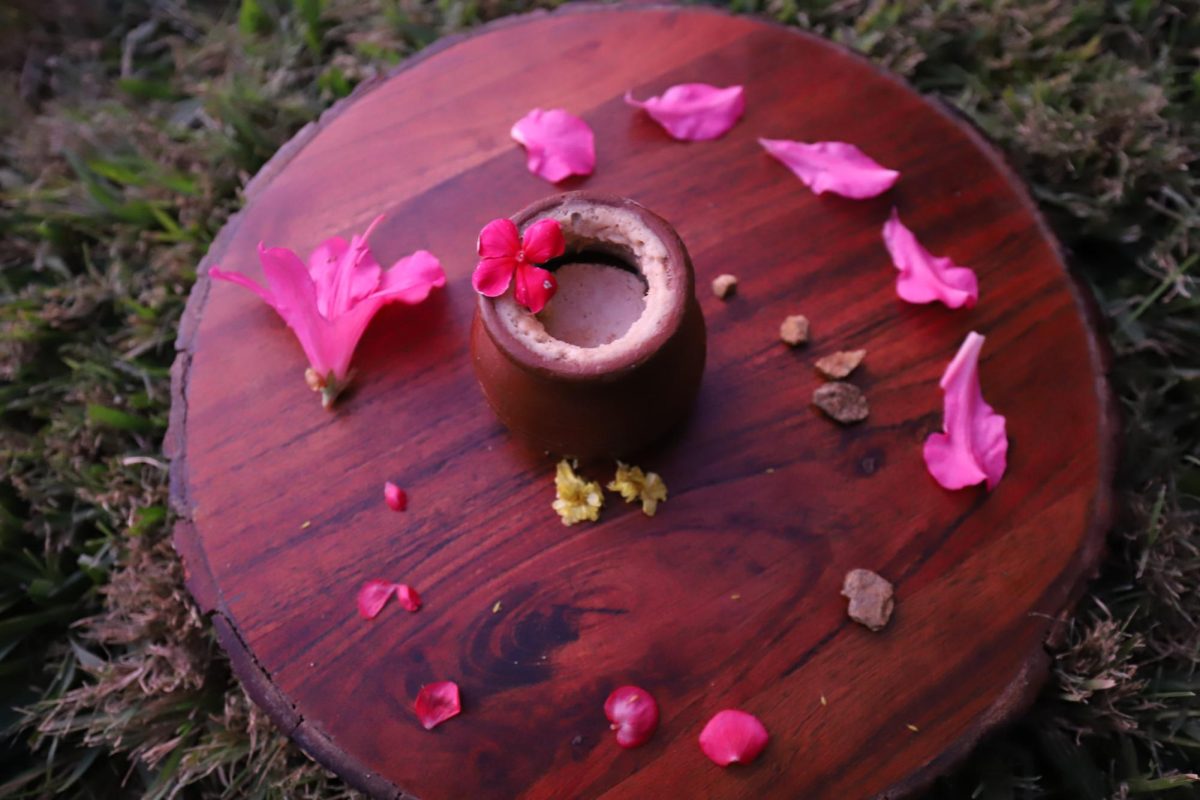
Deeply intertwined in Bengal history, mishti doi serves as the crown jewel of all Bangladeshi desserts. Traditionally served in unglazed brown earthen pots (known as matir handi), the porous clay absorbs excess moisture to deliver a creamy, rich texture. Today, mishti doi can be seen ubiquitously throughout the vendors of the cities of Dhaka or Chittagong. For many Bengalis, a stroll through Old Dhaka at dusk isn’t complete without stopping by a sweets shop selling mishti doi bowls.
The dish gets its signature sweet and slightly tangy taste from caramelizing chopped jaggery directly into simmering milk before it is left to ferment slowly overnight. This modern way of creating mishti doi dates back to approximately 19th-century Bengal. The Bose family of Sherpur is often credited with developing the delicacy. The family is said to have discovered the sweet and popularized it as a refreshing treat during the region’s hot summers.
Over time, mishti doi has evolved to include a variety of flavors and additions, such as saffron, pistachios, fresh fruit and even chocolate. In many Bengali households, it is commonly served with puffed rice (muri) for breakfast, creating a pleasing contrast between the crunchy grains and the creamy yogurt. Today, this beloved sweet remains a staple in daily life and holds a special place in celebrations, festivals and family gatherings alike.
Today, mishti doi is inseparable from moments of celebration, weddings, Eid gatherings and even casual family visits often end with a small clay pot being placed in front of each guest. No matter how globalized Bangladeshi cuisine becomes, mishti doi holds its place as a symbol of Bengali warmth, craftsmanship and culinary pride.
Ingredients:
- -1 liter whole milk
- -175-180 grams of palm jaggery ¾ cup finely chopped
- -½ teaspoon green cardamom powder
- -2 tablespoons curd or a yogurt starter
Instructions:
Boiling the Milk-
- Pour 1 litre of whole or full-fat milk into a heavy kadai (wok) or pan. Heat on low to medium-low.
- Stir occasionally as the milk heats. Bring it to a boil.
- Once boiling, continue to simmer on low to medium-low, stirring often.
- Scrape dried milk solids from the sides and mix them back into the milk.
- Reduce the milk until it reaches ⅓ to ½ of its original volume.
- Remove the kadai from the heat and let the milk cool for 8–9 minutes.
Making the Mishti Doi Base-
- While the milk cools, finely chop or grate ¾ cup (175–180 g) palm jaggery.
- After the 8–9 minutes, add the jaggery to the warm milk (milk should be around 60–65°C).
- Stir until the jaggery fully dissolves.
- Add ½ teaspoon cardamom powder and mix well.
- Allow the milk to cool until warm—comfortably warm to the touch, not hot (or 40–44°C if using a thermometer).
- Add 2 tablespoons curd/yogurt starter.
- Whisk thoroughly until the curd dissolves completely and the mixture is smooth
Setting the Mishti Doi-
- Pour the mixture into earthen or terracotta bowls.
- Cover each bowl with a lid or seal with aluminum foil.
- Place the bowls in a warm area and allow the Mishti Doi to set. This may take 7–24 hours depending on room temperature.
- Once set, the doi should look firm with a slight wobble. Transfer the bowls to the refrigerator.
- Store Mishti Doi in the fridge; it keeps well for 5–6 days.
- Serve chilled, either with meals or as a dessert.