

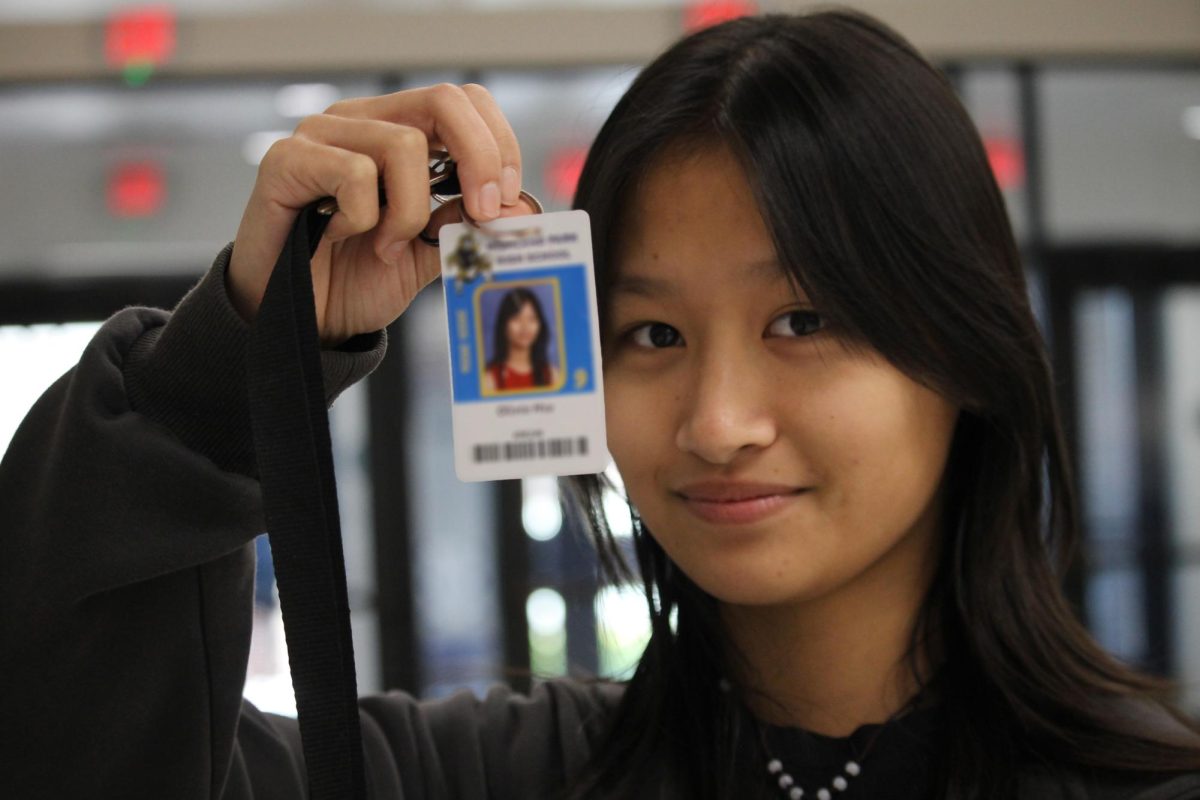
In recent memory, students entering the school have always been prompted for their school issued ID. However, in past years, failure to present an ID seldom resulted in any consequences. Currently though, repeatedly forgetting an ID can quickly lead to punishments such as lunch detention.
This year, students trying to enter the building without an ID have their names recorded into a spreadsheet. Should a student fail to bring their ID for multiple days, they will face consequences, most frequently being lunch detention.
“It’s a safety issue,” Assistant Principal Troy Gray said. “It’s to protect you guys, because we don’t want people coming in from outside of the school. That’s the whole purpose of an ID.”
Students too have noticed less lenience with the policy. In comparison to previous years, some students have noticed the policy being much stricter.
“I feel like my freshman year they weren’t as strict. I forgot mine once and all I had to do was fill out a form, and they said I had to bring it the next day,” senior Kate McCarty said.
The actual ID policy written in the Kilite has not changed from previous years. This policy states that students are required to produce their ID at any time when asked by an administrator. However, the administration has chosen to police this issue more stringently out of a concern for student safety.
“It’s always been in The Kitlie that students are required to have their IDs,” HPISD Chief of Police Mark Rowden said. “When emergencies happen, we need to know [who everyone is] and it’s very difficult to do that when students don’t have their IDs.”
In order to better enforce the ID policy, the names and ID numbers of students without ID are written down and added to a spreadsheet. At the student entrance, Gray spends each morning recording these names.
“If a kid doesn’t have it two days in a row then I assign them lunch detention and if they get it before lunch and they can show me that they have it, then I take their lunch detention away,” Gray said. “I’m trying to be user friendly about it.”
These lunch detentions are entirely an internal punishment, meaning they are only visible on records sent throughout the district, but would not be included on any permanent record sent to a college.
“It doesn’t go anywhere outside of this building. College never sees that,” Gray said.
At $20 though, the cost of a new ID can be steep, so Gray also offers additional ways for students to ‘pay’ the amount.
“If a kid doesn’t have $20, I always tell them that I will pay up to $5 a day, then what they do is they have to work like the last five minutes of lunch detention helping me clean up the cafeteria, whether it’s picking up tables, picking up trash,” Gray said. “I don’t actually pay for it. They just have to work it off.”
Should a student fail to have their ID for an extended period of time, the consequences can escalate.
“If it’s that student that we’ve told multiple times, then it becomes a different situation. Then it becomes what’s called insubordination,” Gray said. “Consequences for that can range anywhere from longer lunch detentions all the way up to ISS.”
This change to enforcement came at the beginning of the year after meetings between the administration and the police.
“In the beginning of the summer, we met with Chief Rowland again. That was one of the areas that he said he needed some help,” Gray said. “That’s why we decided to do something different.”
For the police department, enforcing IDs is important because it allows them to ensure every person in the building is supposed to be there, but enforcing IDs is also time and resource intensive.
“There are other things that we do on a regular basis that require our attention and having to deal with IDs draws us away from them,” Rowden said.
Additionally, some days are worse than others when it comes to IDs being left at home. Specifically, there is an uptick in forgotten IDs after school events on weekends.
“Probably one of the biggest problems we have is after some kind of big event, like for instance, just after the homecoming dance, students are required to have an ID to be able to get into that, then they forget it the next Monday morning,” Rowden said.
Though the school is seen as a safe place, campus safety is a real concern, and IDs are a vital part of keeping the environment secure.
“Highland Park High School has created a false sense of security because everybody feels comfortable coming in,” Gray said. “[But with] Chief Rowden and his team and our team, it’s safety first.”
For the administration and school police, protecting students and teachers is a serious responsibility, and IDs are a part of their efforts to keep the campuses safe.
“We want you as a student to know that when they walk in those doors that we’re here to keep them safe,” Rowden said.